Thursday, 6 November 2008

Making history on both sides of The Pond

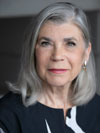
On Tuesday 4 November 2008, whilst Americans across the USA were voting for their first black President, another historic event was taking place in the UK. Dr Jean Venables OBE was inaugurated as the first woman president of the Institution of Civil Engineers in its 190-year-old history.

It was a privilege and a pleasure to be one of the capacity audience in the imposing ICE headquarters building in Westminster to hear Jean deliver her presidential address. She pledged action on climate change, putting engineers right at the heart of infrastructure policy decision making, advising government every step of the way.

"We need to take the risk of taking decisions –now," she said, with calm authority. "We have got to engender the same sense of urgency and importance about climate change that the recent banking crisis has had."


A leading engineer in the field of flood risk management – for which she was awarded the OBE in 2004 - Jean has combined her engineering career with running a successful consultancy with her husband Professor Roger Venables and bringing up two sons. She has an impressive portfolio of appointments and awards, including Fellowship of the Royal Academy of Engineering, visiting lectureships at Imperial College and Southampton University, and Chairmanship of the Thames Estuary partnership.

Told at school that ‘girls don’t do engineering’, Jean discovered that this was indeed the case when she arrived at Imperial College to be one of only two women studying civil engineering that year. As she commented in her address, "Considering I was only the 16th woman to become a Chartered Member of the ICE and the 12th to become a Fellow, it’s not surprising there’s never been a women president."


"ICE currently has only 8% female membership across all grades, so clearly there is much to be done to get more women into civil engineering. However, the landscape is already changing with 20% of the student and graduate member grades being women."

An important step in this direction was demonstrated when Jean introduced her President’s Apprentices – five young graduate members of ICE chosen to work closely with her throughout the year. They will gain an invaluable insight into the role of a senior engineer and the workings of the institution. Three of the five are young women.

A salutary tale

Sitting two along in the Great Hall, at the inauguration of Jean Venables OBE as president of the Institution of Civil Engineers, was another rare female of the species FICE (Fellow of the Chartered Institution of Civil Engineers). She told my husband the following tale, after being impressed by his feminist credentials (he was a fellow student of Jean Venables in the sixties and fought alongside her to stop the habit of the City and Guilds Association of allowing only one woman - the President’s wife - to attend their official events).

When she became a Chartered Civil Engineer, said our new friend, she was taken aback that the letter confirming her achievement was addressed to ‘Mr’. Her request that this be changed to ‘Miss’ was refused by the female ICE staff member, who pointed out that as only two of the 1500 newly chartered individuals were female it was not worth changing the usual salutation.

It was only when the newly fledged CEng pointed out that her local authority employer was refusing to grant the increased salary that Chartership brings, on the grounds that the letter clearly couldn’t be referring to her, that the august body produced a correctly addressed letter.

Monday, 27 October 2008

Fish and the Widow

This was the weekend that the clocks went back –and we made the most of the extra hour by getting round to hanging the long awaited jizai-kagi above the two metre wide open fireplace in our cottage in Gloucestershire.


A jizai-kagi is an adjustable hook to hold cooking pots above the central fireplace in a traditional Japanese house. It is often in the form of a carved fish, in the hope that a symbol synonymous with water will give protection against fire destroying the wood and paper houses.

We first saw a jizai-kagi some 15 years ago, in a tiny shop in a village on the Nakasendo Way, a 500 km cobbled highway built in the 8th Century to link Kyoto and Edo (now Tokyo). We didn’t know then what it was for, but our decision not to buy the battered but lovely wooden carp –and to find some way of carrying it home safely – has been a source of regret ever since.

But we decided this year to resolve the regret, and after considerable sleuth work, we took delivery of a beautifully carved, very heavy, one metre long jizai-kagi in the shape of a carp, complete with pot hook, from a Japanese antique dealer based in Canada.

Off we went to the local hardware store to buy the fixings to hold our piscatorial insurance policy over the fireplace. A pair of hot dip galvanised staples, on back plates, were just the job and they were duly screwed into the elm beams of the ceiling.


As I gathered up the packet that had contained the staples, I noticed the manufacturer’s name was Eliza Tinsley. Intrigued, I searched on Google to discover that when Eliza’s husband died in 1851, leaving her with five children under the age of 11, she took over his business, a company that made nails, chain, rope and hardware for agricultural, building and engineering use. Known locally as 'the widow', she built a reputation as a fair and knowledgeable businesswoman and the business thrived, becoming the largest of its kind in the West Midlands.


In fact, according to the National Census of 1871, around 4,000 people were employed by Eliza Tinsley, many of them outworkers living in the chainmakers cottages prominent throughout the region. They would visit the site once a week to collect materials and then would return the following week with finished product forged in their own outhouses.

It is very likely that most of these 4,000 people employed by Eliza Tinsley were girls and women, who dominated the Black Country nail making trade in the West Midlands at that time. According to Arthur Willets, author of The Black Country Nail Trade, it was common practice "for colliers and ironworkers to marry a nailing wench who was also expected to bring up the children while they followed more manly pursuits."


Those men who did make nails spent much of their time determined to keep their wages higher than those of the women, who at that time did not have the vote, let alone the benefit of the Equal Pay Act.

Today Eliza Tinsley http://www.elizatinsley.co.uk/ is a PLC owned by the Atlantic Group, making buckets and hydraulics for JCB and Caterpillar diggers as well as a huge range of chains, ropes and hardware. I would like to think that Eliza Tinsley’s reputation as a ‘fair and respected businesswoman’ meant that she was an enlightened employer. Perhaps establishing the ethos that led to the company deciding, 150 years after she became owner, to reduce dividends to shareholders to make good the shortfall in the company’s pension scheme for its workers.

As Andrew Hall, CEO of the group at the time said in a Moneybox interview in 2001 on BBC Radio 4, "My predecessors made pension promises to a whole group of people which we as a current management have a responsibility to honour."
Back to the matter in hand, we decided a toast was in order to celebrate the arrival of our beautiful fish guardian, hanging securely above the hearth thanks to an entrepreneurial woman ironmonger from the Black Country known as the widow. A bottle of Veuve Cliqot seemed appropriate.

Sunday, 12 October 2008

Ladies who power lunch


To mark the publication of its 'World's 100 Most Powerful Women ' list for 2008, Fortune magazine hosted a lunch for 50 women from the worlds of business, finance and politics in the City of London last week. Inexplicably invited to the party, I found myself seated next to the host for the event, the dynamic, articulate and funny Ann Moore, Chairman and CEO of the world's largest magazine company, Time Inc.


It quickly became evident that despite a belief that there is still much to be done to get more women at the top, Fortune magazine had managed to gather together an impressive group in one room. Conversation took off fast and furious around our table, reflecting the many areas in which women have become influential. The Right Hon Patricia Hewitt MP, (one time Minister for Trade and industry and now non executive director of BT) shared recollections with Dame Judith Mayhew-Jonas (first woman to run the City of London, chair of the Royal Opera House and now tasked with the transformation of London's West End) of their trade mission to India.


Other table companions included Jodi Birkett, who at 32 is the youngest ever corporate finance partner at Deloitte - and the oldest member of her veteran's rugby team (she plays hooker) - and Susan Payne, who set up her own asset management company Emergent in 1996 and heads the London chapter of 85 Broads, the world’s biggest professional women’s network. Dona Roche-Tarry, holder of top level posts at BT before becoming Head of HR at Barclays Commercial is now partner of international executive search firm CT Partners specialising in finding the right person for roles on the board.

Anya Hindmarch, the 'Handbag Queen' who combines running her £20m international business with bringing up five children was the eighth guest at our table. Ann Moore delightedly produced her Hindmarch purse and Patricia Hewitt and Judith Mayhew-Jonas waxed lyrical about the Hindmarch bag given to first class travellers on British Airways. "Much better than the terrible plastic thing with a rubber band around it from Qantas, said Australian born Hewitt, clearly voting for her adoptive country when it comes to handbags. Which highlighted another interesting factor - our table boasted an Australian, a New Zealander, a Canadian, two Americans and three Brits.

But the dominant topic for the lunch was the tumultous events in the world economy. One of the most worrying factors was not only the ability but the physical wellbeing of the people dealing with the global financial meltdown, said Ann Moore. "They are all suffering from severe sleep deprivation, " she said, "which must impact on their ability to make rational decisions."

In conversation over coffee with co-host Stephanie Mehta, Global Editor of Fortune, Ann Moore told guests that to survive what is going to be a severe downturn, you must take care of your health and manage stress levels, despite the pressure, she advised. And when it comes to more women succeeding in business, employers need to recognise that people have lives outside work and women should help each other with mentoring and support.

But this is the comment that really convinced me, a one-time journalist who set up her own marketing consultancy specialising in engineering and construction, that Ann Moore was definitely my new best friend.

"We really don’t need any more bankers," she said, "What the world needs now are more engineers, journalists, marketers and entrepreneurs."

Friday, 10 October 2008

Women and Tomorrow's world

There is nothing like being asked to chair a conference on the role of women in the government’s ‘Vision for Science and Society’ to focus the mind on this challenging topic. So before setting off for the Institute of Directors last week, I marshalled some thoughts in the hope of steering the day from lively debate to practical proposals.

The conference was organised by the UK Resource Centre for Women in SET, as one of a series to gather experience and recommendations on how to ensure that gender equality is included in government policy on science and society. (http://www.ukrc4setwomen.org/html/about-ukrc/influencing-policy/a-vision-for-science-and-society/)


The official report on the fascinating day will be posted shortly, but in the meantime, here are some personal musings on the three topics highlighted in the ‘Vision for Science and Society’ consultation paper produced by DIUS, the Department for Innovation, Universities and Skills.

A society excited by and valuing science
In 2008, my wonder that aircraft can fly, that clean water comes out of the tap and that I can speak to people around the world through a small piece of metal is probably regarded by many as childish naivety rather than awe at technological achievement. But let’s face it, there is a myriad of extraordinary ways in which our lives are enriched by science, but which too often generate unrealistic expectation rather than appreciation.

A society that feels confident in the use of science.
The complexity of scientific endeavour makes effective communication a challenge. Add in questions of ethics and practice and it is perhaps not surprising that public confidence can be tested. Now there is an additional challenge, caused by the growing division between religious and scientific belief. US vice presidential candidate Sarah Palin is the latest high profile proponent for teaching creationism side by side with Darwinian science in schools.
Extraordinary to think that it is nearly 400 years since Galileo was forced by the Inquisition to recant his theory that the Earth moves around the Sun, causing him great personal distress in balancing his religious commitment and scientific belief. But then it is only 16 years since the Vatican acknowledged that he was right. If you want to know more, read Dava Sobell’s book Galileo’s daughter.

A society that supports a representative, well-qualified scientific workforce.
It is paradoxical that despite the liberating influence of science, engineering and technology on women’s daily lives, that so few choose to study or work in the disciplines that have created that freedom. The need to improve advice and opportunities offered to girls and young women, together with realistic working conditions and effective career development remains paramount.
At a smart gathering of legal eagles last week it was rather depressing to be told by an articulate young woman that she couldn’t see anything interesting to do with her biology degree so she had opted to become a litigation lawyer.
On the plus side, just a few days earlier at an even more glittery evening at Claridges, it was a delight to sit at table with one of the regional winners of the Women in Property awards for young women studying built environment subjects.
Just starting on the third year of her architecture degree, Katherine Timmins told me what she did when faced with no practical careers advice or help from her school in identifying how to take up her chosen career path., "I just went on the web and sorted it out for myself," she said. An excellent role model in the making.

Sunday, 7 September 2008

Women behaving nicely

The autumn season gets off to an excellent start, with the all-woman panel session on Good Business on 4 September at the International Construction Superconference in London.

Well, it was an all woman panel until the evening before, when the chap from the concurrent session asked if he could join our hen party, rather than run his solo presentation in the next suite at the same time.

Taking the request as a compliment and happy to demonstrate inclusiveness, (not to mention welcoming a larger audience) I agree. So David Lane of Hill International joins the line-up, with Janet Kidner of Lend Lease Retail and Communities, Suzannah Nichol of the National Specialist Contractors Council and, thanks to sponsorship by the Chartered Institute of Building, Bridgette Gasa from COEGA development zone in South Africa.

Our panel theme of Good Business addressed the challenging and sometimes rather nebulous issues of what might be described as good behaviour in construction - sustainability, diversity, cultural awareness, governance, fair trading, human capital, corporate social responsibility…… Rather than seeing such issues simply as a moral ‘nice to have’ or as an irksome burden of compliance, the speakers set out to demonstrate that good behaviour can help to do Good Business.

Janet Kidner started the session with a calmly professional presentation on Lend Lease Retail and Communities UK’s commitment to practical sustainability. As she put it, sustainability is good for their business, enhancing competitive advantage and helping to win projects, reducing running costs and attracting good people.

Suzannah Nichol, Chief Executive of the National Specialist Contractors Council, followed with a no holds barred and highly entertaining summary of why she has launched a campaign for fair payment in the supply chain. As she put it, “Major contractors here may find some of my comments uncomfortable, but the fact is, not paying on time the people who actually do the work is totally unacceptable.”

In contrast, softly spoken Bridgette Gasa took to the lectern to outline how she is tackling job creation and business support for Small, Micro and Medium Enterprises as part of major infrastructure regeneration in South Africa. She described how the long term objectives of capacity building, through individual training, business support and setting a quota of work opportunities for minority owned firms, is beginning to build human capital in a major industrial development zone.

Finally David Lane described how good behaviour is essential when setting out to tap into the vast opportunities for doing business in China. Tips on customs and etiquette included: understanding the importance of seniority, waiting to be guided to a specific seat at dinner, sniffing rather than blowing your nose into a handkerchief and remaining articulate even after significant consumption of alcohol.

Judging by the audience reaction, once again the all woman Superconference panel (ok, with one man this year) delivered a refreshing approach to familiar topics, in a tightly paced way by articulate, professional and entertaining women.

Yet, the only women speakers at the conference were the four of us on that panel! Come on everyone, let's try to redress the balance. Next time you see a pale, male and stale construction conference line-up, why not take a leaf out of David Lane’s book and simply phone up to invite yourself (or a woman you know) on to the platform. Asking firmly yet very politely, of course.

Tuesday, 5 August 2008

Bright spark on a damp day

Now that the summer holidays are here, the builders are at work in the small primary school in the village. They are knocking down walls to ‘create an appropriate learning environment’ for the 70 children attending the little Cotswold stone school built in 1878 by the Baptist Church.

In the second week of works, the three white vans parked on the verge opposite the school are joined by a fourth, the electrical contractor. Passing by on my return from the Village Shop and Post Office (thankfully spared closure) I notice that the slim figure with a mane of curly auburn hair, busy selecting mounting boxes and switches boxes in the back of the van, is a young woman.

Long mystified by why there are so few women electricians, compared with the other building trades, I stopped to chat. She is apprenticed to a local firm, training at the local college and loves the work. She knows three others in the area, all equally happy. Does she think that it is the maths that might put girls and women off?

"No," she says, "understanding the basics is quite simple." She’s really looking forward to qualifying in a year’s time - there's much more interesting stuff to do than just installing sockets.


Just the sort of person to shed some new light on the world of work, by talking to the children about what she did in the summer holidays.